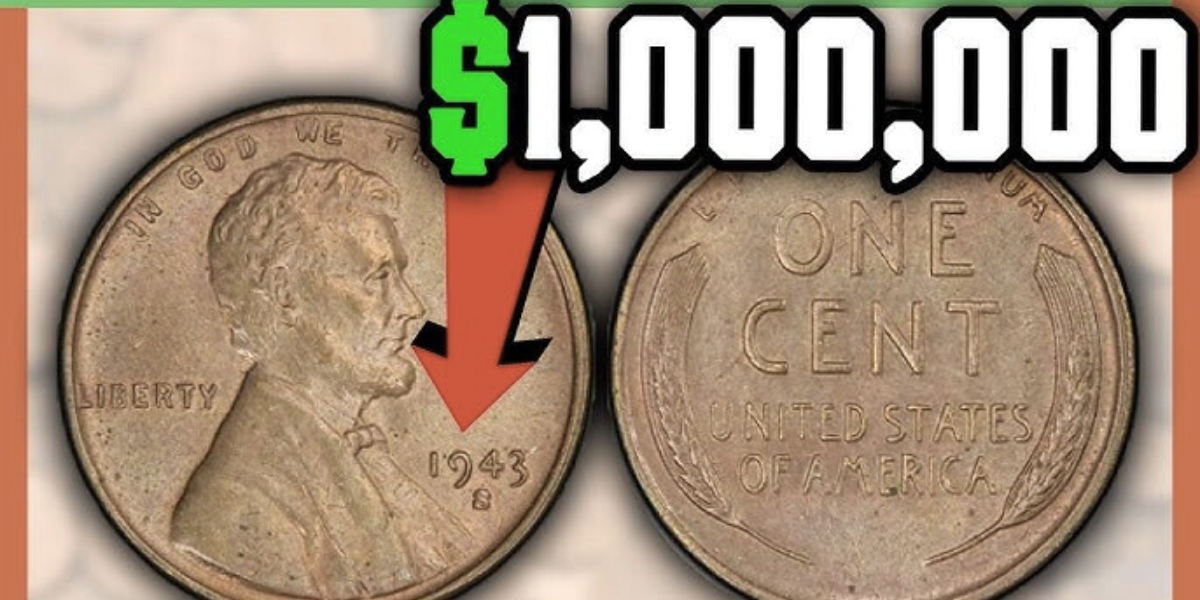
Imagine finding a penny in your old coin jar that could be worth more than $1 million. It may sound unbelievable, but one special 1943 penny has sold for huge amounts at auctions. In 2026, collectors are still searching for this rare coin. The surprising part? It looks almost like a normal penny.
In this simple guide, we explain why the 1943 penny is so valuable, how to check if you have one, and what steps to take next.
Why Is the 1943 Penny So Special?
In 1943, during World War II, copper was needed to make military equipment. Because of this, the U.S. Mint stopped using copper for pennies and made them from steel coated with zinc.
These steel pennies look silver in color.
However, by mistake, a few pennies were made using leftover copper blanks from 1942. These copper 1943 pennies are extremely rare. Only a small number are known to exist today.
That mistake is what makes the coin so valuable.
How Much Is a 1943 Copper Penny Worth in 2026?
The value depends on condition, but some have sold for very high prices.
Estimated Value Table (2026)
| Condition | Estimated Value |
|---|---|
| Circulated (used) | $100,000 – $250,000 |
| Very Fine Condition | $250,000 – $500,000 |
| Mint Condition | $750,000 – $1,000,000+ |
Some auction records have crossed the $1 million mark for top-quality coins.
Not every 1943 penny is valuable. Most are steel and worth only a few cents to a few dollars.
How to Check If You Have the Rare Copper Version
Here are simple steps you can follow at home:
1. Check the Color
- Steel pennies look silver or gray.
- Rare copper ones look brown or reddish like a normal penny.
2. Use a Magnet
- Steel pennies stick to a magnet.
- Copper pennies do NOT stick.
3. Check the Date
Make sure the date clearly says 1943. Be careful of fake altered coins where the date was changed from 1948 to 1943.
4. Weigh the Coin
- Steel penny weight: about 2.7 grams
- Copper penny weight: about 3.1 grams
A small digital scale can help.
Why Is It So Rare?
Experts believe fewer than 20 real 1943 copper pennies exist. They were created accidentally when leftover copper blanks were used in minting machines.
Because of the small number available, collectors are willing to pay huge amounts to own one.
Beware of Fake 1943 Copper Pennies
Due to the high value, many fake versions exist.
Common tricks include:
- Changing a 1948 penny into 1943
- Copper-plating a steel penny
- Creating replica coins
If you think you found one, do not clean it. Cleaning can lower its value.
Have it checked by a professional grading company such as:
Official U.S. Mint website:
https://www.usmint.gov
Quick Comparison Table
| Feature | Steel 1943 Penny | Rare Copper 1943 Penny |
|---|---|---|
| Color | Silver/Gray | Brown/Copper |
| Magnet Test | Sticks | Does Not Stick |
| Weight | 2.7 grams | 3.1 grams |
| Value | Few cents | $100,000+ |
Frequently Asked Questions (FAQs)
1. Are all 1943 pennies valuable?
No. Most 1943 pennies are steel and common. Only the copper error version is rare.
2. How many 1943 copper pennies exist?
Experts believe fewer than 20 genuine coins exist.
3. Should I clean my 1943 penny?
No. Cleaning can reduce its value significantly.
4. Where can I sell a rare penny?
Rare coins are usually sold through major auction houses or certified coin dealers.
5. How do I confirm if my coin is real?
Send it to a professional grading service like PCGS or NGC for authentication.
The 1943 copper penny remains one of the most exciting coins in American history. It was created by accident during a time when the country was focused on war production. Because only a few were made, collectors in 2026 are still willing to pay very high prices for one in good condition. However, most 1943 pennies are made of steel and are not worth much. If you believe you have a copper version, test it carefully using a magnet and scale, and then contact a professional grading service. Never clean or damage the coin. A simple penny found in an old jar could possibly change your financial future, but only if it is genuine and properly verified.