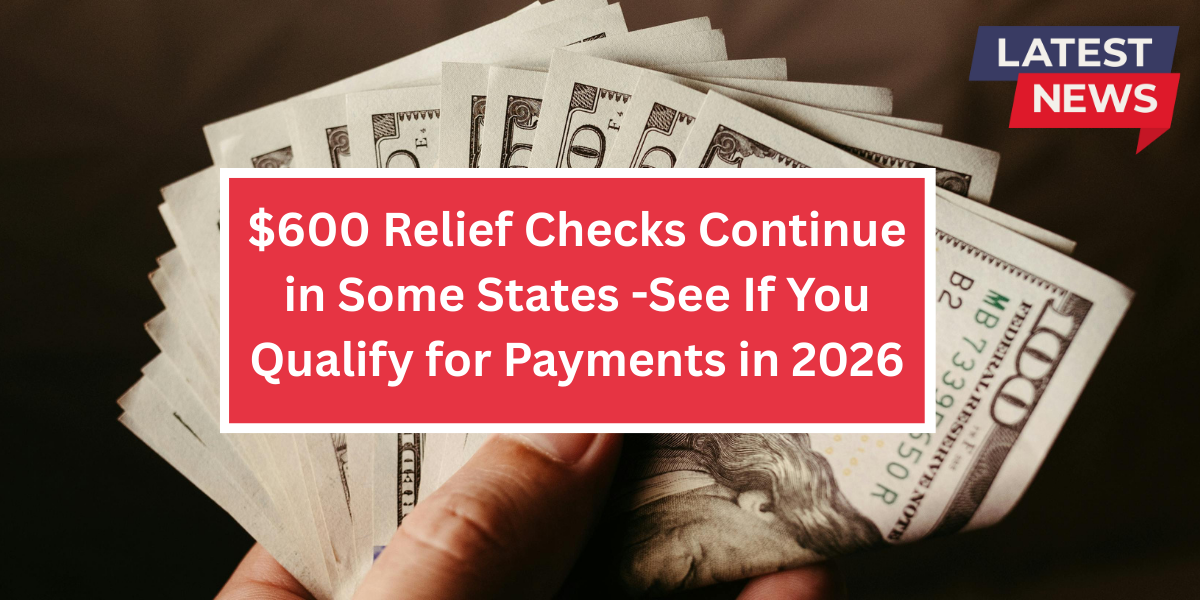
Many Americans are searching for updates about $600 relief checks in 2026, especially as living costs remain high in many parts of the country. While there is no new nationwide federal stimulus payment approved this year, some state governments continue to offer relief payments to eligible residents. These payments are usually funded by state budget surpluses or special relief programs designed to help families manage rising expenses.
What Are the $600 Relief Checks?
The $600 relief checks are state-level payments, not federal stimulus checks. Different states have created their own programs to support residents facing financial pressure from inflation, housing costs, or energy expenses.
These payments may be called:
- Inflation relief payments
- Tax rebates
- Middle-class refunds
- Cost-of-living payments
The amount and eligibility rules vary by state.
Why Are States Sending Relief Payments in 2026?
Some states collected higher tax revenue than expected in recent years. Instead of keeping the extra funds, state governments chose to return part of the money to residents.
Common reasons for relief payments include:
- Helping families manage higher living costs
- Providing economic support without federal programs
- Returning budget surplus funds to taxpayers
Each state decides its own payment rules and distribution schedule.
Example of State Relief Payment Structure
The following table shows how state relief programs generally work. Exact details depend on the state.
| Payment Type | Typical Amount | Eligibility Basis | Payment Method |
|---|---|---|---|
| Inflation Relief Check | $200 – $600 | Income limits, residency | Direct deposit or check |
| Tax Rebate | $300 – $1,000 | Filed state taxes | Direct deposit |
| Energy Relief Payment | $150 – $600 | Utility or income eligibility | Check or credit |
Always confirm details on official state websites ending in .gov.
Who May Qualify for $600 Relief Payments?
Eligibility usually depends on:
- Being a resident of the state offering the payment
- Filing a recent state tax return
- Meeting income limits
- Having a valid Social Security number or taxpayer ID
Some programs also give extra payments for families with dependents.
How to Check If Your State Offers Payments
The best way to confirm eligibility is to visit official government websites. Examples include:
- Benefits information: https://www.benefits.gov
- IRS official site (for federal updates): https://www.irs.gov
You should also check your state’s Department of Revenue or Treasury website for announcements.
Avoid Relief Payment Scams
When relief payments become popular online, scams also increase. Be careful if you receive:
- Text messages asking for personal details
- Emails promising faster payments
- Social media links requesting banking information
Government agencies do not ask for sensitive information through unofficial messages.
The $600 relief checks being discussed in 2026 are mostly state-level payments designed to help residents handle higher living expenses. While there is no new federal stimulus check approved, some states continue to provide financial relief through tax rebates or inflation support programs. Because every state has different rules, it is important to check official government websites to confirm eligibility and payment timelines. Understanding the difference between federal and state payments can help avoid confusion and protect people from misinformation. Residents who believe they may qualify should review state announcements and ensure their tax filings are up to date so they do not miss any available financial assistance.
Frequently Asked Questions (FAQs)
1. Are the $600 relief checks federal stimulus payments?
No. These payments are generally issued by individual states, not the federal government.
2. Which states are sending $600 relief checks in 2026?
This varies by state. You should check your state’s official government website for current programs.
3. Do I need to apply for the payment?
In many cases, payments are automatic if you filed your state tax return, but some programs may require an application.
4. Will everyone receive the $600 payment?
No. Eligibility usually depends on income level, residency, and tax filing status.
5. How will the payment be sent?
Payments are typically sent through direct deposit or paper check.
6. Are more federal stimulus checks expected in 2026?
As of now, no new nationwide federal stimulus checks have been officially approved.